



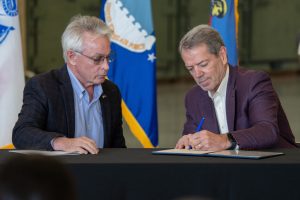
It’s not quite “Schoolhouse Rock,” but after Nebraska’s governor last year missed a step in filing his line-item budget reduction vetoes to the right state office, some of the officials involved clarified how a bill becomes a law.
The office of Secretary of State Bob Evnen made a two-page memo, dated Dec. 9, which details the steps a governor must take following legislative action. The memo was shared with Nebraska Gov. Jim Pillen’s office, Speaker John Arch of La Vista and the office of the Clerk of the Legislature. A spokesperson for Evnen provided the Nebraska Examiner a requested copy on Friday.
Laura Strimple, a spokesperson for Pillen, shared the same memo. Clerk of the Legislature Brandon Metzler said his office had no new guidance.
“The process is clarified,” Arch said Thursday, a day after the Legislature approved its 2026 budget adjustments in Legislative Bills 1071 and 1072.
Under the Nebraska Constitution, the governor must sign or veto legislation within five days of receiving it. If the Legislature is still in session, the governor can choose to not sign, and the bill will become law without his signature.
For this year’s budget adjustment bills, Pillen’s deadline is midnight Tuesday. Strimple did not respond last week when asked if Pillen expected to veto any spending from line items in the budget.
Last year, Pillen tried to veto $32.5 million from the state budget, about $14.5 million of which was from general fund spending:
- $18 million for recreational upgrades around Lake McConaughy.
- $11.9 million from the Nebraska Supreme Court.
- $2 million from public health departments.
- $511,972 from the State Fire Marshal for salary and health insurance premium increases.
Pillen’s team delivered the official copies of LB 261 and LB 264, last year’s budget bills, to Evnen’s office, rather than the Clerk of the Legislature’s Office, by midnight May 21.
It was the first time, many lawmakers and legislative staff said, that any veto had been blundered in this way.
Rather than launching an interbranch lawsuit — which would have gone to the Nebraska Judicial Branch, whose budget Pillen wanted to cut by nearly $12 million — Pillen, Evnen and Arch agreed to meet “to avoid a similar future dispute.”
“All parties have agreed to meet during the interim to clarify and confirm procedures that meet the constitutional requirements for transmittal of budget vetoes, and ensure they are maintained in a clear written guidance for future implementation by all offices,” the officials said last May.
The Examiner last May requested public records about the 2025 budget vetoes, which painted a partial timeline of what happened.
Addressing the line-item veto situation after the 2025 legislative session, Pillen told the Examiner that the veto process includes “human beings” and accepted responsibility. He said the mistake on May 21 was “a miscommunication on where it was supposed to go.” Pillen, whose reelection bid has been endorsed by President Donald Trump, was at the White House the following day attending a “Make America Healthy Again” event.
“Bottom line: We made a mistake,” Pillen said at the time. “I’d have thought, because we all work together, that a flag would have been thrown and said, ‘Hey, let’s do X,’ but there wasn’t. And then the glass of milk was spilled the next morning.”
Evnen and his office have repeatedly said it was not their duty to throw a flag on the vetoes. The clarification memo makes this clear, too: “We do not act as a courier for the governor or Legislature in delivering bills between the two branches of government.”