



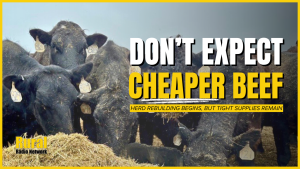
The nation’s cattle herd remains historically small, even as new federal data offers the first meaningful indication that ranchers are beginning to hold back replacement heifers and slowly lay the groundwork for rebuilding.
Livestock market analyst Kyle Bumsted said Friday’s USDA reports reinforce why cattle prices have remained at record levels. While total cattle inventories showed a slight year-over-year increase, the underlying supply of market-ready cattle remains extremely tight.
“Cattle are simply not leaving the feed yards at a normal pace. They’re staying on feed longer and coming out heavier. And that’s kind of how the industry keeps the beef tonnage up while the calf supply keeps getting smaller.”
Bumsted said drought conditions also continue to influence producer decisions, with some calves being placed into feedlots earlier than normal as pasture conditions deteriorate.
The biggest takeaway, however, may be the industry’s first clear signal that producers are beginning to retain more replacement females after years of liquidation.
“That’s the first genuine heifer retention signal of this entire kind of cattle cycle.”
Holding back heifers means fewer feeder cattle available in the near term, even as it sets the stage for eventual herd expansion. Bumsted cautioned that rebuilding a cattle herd is a slow process, and consumers should not expect beef supplies to rebound quickly.
“There’s two things that are kind of true here at the same time. In the near term, the feeder pipeline just got tighter. A smaller calf crop stacked on top of heifer retention means fewer cattle available to play here over the next 18 months.”
That combination helps explain why cattle prices have remained elevated despite concerns about consumer demand. Bumsted noted another supportive sign came from USDA’s cold storage report, which showed beef inventories declining rather than building.
“The freezer build that the bears are worried about didn’t show up,” he said, suggesting beef continues moving through the supply chain better than many expected.
While the reports hint that the cattle cycle may finally be turning toward expansion, Bumsted said any increase in beef production remains years away. For now, tight supplies continue to underpin the market.
Key takeaways
- Total cattle inventory increased slightly from a year ago, but the U.S. herd remains near its smallest level in decades.
- Feedlots are keeping cattle longer and marketing heavier animals to help offset shrinking calf supplies.
- USDA data showed the first meaningful increase in beef replacement heifers, signaling early herd rebuilding.
- Retaining more heifers means fewer feeder cattle will be available over the next 12 to 18 months.
- Beef in cold storage declined, indicating beef continues moving through the supply chain rather than accumulating in freezers.
- Herd expansion has likely begun, but meaningful increases in beef supplies are still several years away.