



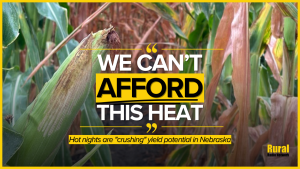
Nebraska crops are approaching a make-or-break point as expanding drought and relentless heat threaten yield potential during some of the most important weeks of the growing season.
The latest U.S. Drought Monitor shows nearly 94% of Nebraska is now experiencing drought, with more than 60% in severe drought or worse. While USDA rates much of the state’s corn and soybean crop in good-to-excellent condition, crops are moving through pollination and pod-setting stages when prolonged heat and a lack of moisture can quickly reduce yields.
Nebraska Extension agricultural meteorologist Dr. Eric Hunt said rainfall expected later this week may determine whether many rain-fed fields can still produce respectable crops.
“We absolutely have to get some decent moisture later this week.”
Hunt said some yield potential has likely already been lost in fields that have missed recent rains, but timely precipitation could still salvage some of the crop.
“As long as we do get some rain later this week, it will still have an opportunity to produce a reasonable yield… we probably have already taken the top off a lot of the rain-fed [crop].”
The bigger concern, Hunt said, isn’t just the daytime highs but the unusually warm nights that prevent corn and soybeans from recovering.
“We can’t afford too many more of these three- or four-day stretches where the overnight temperatures are well in the 70s. That really means that your crops are spending more of their energy on respiration. That’s less energy they’re spending on producing grain.
Those conditions come as Nebraska’s pasture and range continue to deteriorate, with more than two-thirds rated poor or very poor, another sign of mounting moisture stress across the state.
Hunt said the outlook beyond this week remains uncertain. While periodic rain chances are expected into August, he does not yet see the consistent moisture pattern needed to maximize soybean yields. For now, he said, the state’s crop outlook depends largely on whether forecast storms deliver meaningful rainfall before heat stress causes more permanent damage.