



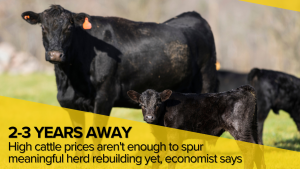
Record cattle prices have fueled historic profits for many cow-calf producers, but those returns alone aren’t likely to trigger a rapid expansion of the U.S. cattle herd, according to a CoBank economist.
Brian Earnest, lead economist for animal proteins at CoBank’s Knowledge Exchange, said a combination of high land costs, an aging producer base and elevated borrowing costs continues to slow herd rebuilding despite strong market incentives.
“We may not see it for the next two or three years before any meaningful expansion occurs,” Earnest said during the National Cattlemen’s Beef Association Summer Business Meeting near Denver.
While cow-calf producers have enjoyed historically high profitability, Earnest cautioned against assuming every operation is thriving.
“The average herd size is less than 100 head,” he said. “There’s a lot of off-farm income that supplements maybe a smaller cattle herd.” He added that today’s financial environment is much different than previous cattle cycles because producers are facing higher production costs and interest rates.
The latest USDA data largely supports that outlook. While total cattle inventories increased slightly from a year ago, indicating early signs of rebuilding, the supply of feeder cattle still remains historically tight. Retaining more replacement heifers reduces the number of feeder cattle available in the short term, even as it lays the foundation for future herd growth.
Structural challenges remain the biggest obstacle, he said.
“If profit is not that leading motive for producers, what’s holding them back?” Earnest said. “Access to land. Land continues to be an expensive portion of the overall production cost. But also thinking about succession planning. The average age of the U.S. cattle rancher is 58 years old.”
Competition for land has intensified as acreage shifts into crop production and residential development, making it more difficult for producers to expand grazing operations, he said.
Even with those challenges, Earnest said lenders remain relatively optimistic about the cattle industry compared with some other agricultural sectors because of strong cattle prices. However, producers should expect credit needs to remain elevated as input costs stay high.
Looking ahead, Earnest encouraged producers to focus on managing risk rather than trying to predict market swings.
“It’s become a very volatile market over the last five years,” he said. “Utilize those tools, look at insurance options and think about offsetting some of the more difficult economic conditions that you’re encountering right now.”