



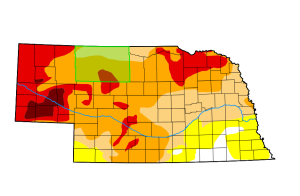
KEARNEY — Drought intensified across portions of central Nebraska during the past week as persistent heat and limited rainfall depleted soil moisture and increased stress on crops and grasslands.
The latest U.S. Drought Monitor placed Merrick, Nance, Howard, and Greeley counties back under moderate drought, classified as D1. Those areas had been drought-free only a few weeks earlier.
Conditions also remained dry throughout the Tri-Cities area. Most of Hall and Adams counties were classified in moderate drought, while severe drought, or D2, covered much of western and central Buffalo County.
More serious conditions persisted farther west. Areas near Dawson County, eastern Frontier County, and northern Gosper County remained under extreme drought, classified as D3.
Recent rainfall did provide some improvement in western Custer County, where the amount of land experiencing extreme drought was reduced.
Nebraska’s most severe drought conditions remained concentrated in the Panhandle. A section of exceptional drought, the highest classification on the monitor’s scale, showed little change from previous weeks.
According to the Drought Monitor, unusually hot and dry weather affected much of the Plains and western United States during the reporting period. Temperatures in western portions of Nebraska and nearby states climbed between three and nine degrees above normal, accelerating moisture loss.
Officials also reported rapidly worsening conditions across parts of Nebraska, Kansas, and the Dakotas. The combination of intense heat and insufficient rainfall contributed to signs of flash drought, particularly in northern Plains states, where impacts to crops and rangeland were already being reported.