



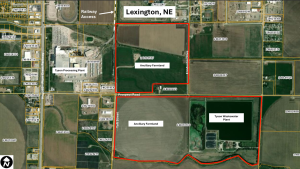
The Lexington Planning Commission has unanimously recommended several measures aimed at preparing former Tyson Foods property for future industrial redevelopment.
During its Wednesday meeting, commissioners approved recommendations for the creation of the South Industrial First Addition subdivision and annexation of approximately 419 acres recently acquired by the City of Lexington from Tyson Foods. City officials said the property east and south of the former Tyson facility will be divided into three tracts to simplify legal descriptions and prepare the land for future industrial marketing and development.

City Manager Joe Pepplitsch said the annexation will bring the newly acquired property into Lexington’s corporate limits while leaving the Tyson production facility itself outside the city for now. Officials indicated that annexation of the production facility could occur within the next six months. Pepplitsch noted the closure of Tyson created challenges for the community but also opened opportunities for future industrial growth in an area that had previously been landlocked by Tyson-owned property.
Planning Commission members also recommended approval of an amendment to Redevelopment Area No. 1, adding the Tyson production building and several parcels near the former Tyson facility and reaffirming the area’s designation as blighted and substandard. City officials said the designation would preserve redevelopment tools, including Tax Increment Financing, that may be needed to attract future investment and repurpose the former processing plant.
In a memorandum to City Manager Joe Pepplitsch, Omaha-based planning and development firm Hanna:Keelan Associates evaluated approximately 400 acres that includes the vacant Tyson facility and surrounding undeveloped land. The review found several indicators of blight and substandard conditions under Nebraska law, including aging structures, vacant property, underutilized land, and obsolete platting. The two primary buildings in the area were built in 1974 and 1981, with an average age of nearly 49 years, exceeding the state’s 40-year benchmark.
The consultant noted the firm did not conduct an on-site inspection and instead relied on county records, satellite imagery, and information provided by the city. While some factors would require a field review for further analysis, Hanna:Keelan concluded there is an adequate number of qualifying conditions to support designating the area as both blighted and substandard, making it eligible for inclusion in Lexington’s existing redevelopment district.
In addition, the commission endorsed updates to Lexington’s official zoning map and extraterritorial zoning jurisdiction boundaries. Officials said the revisions simplify zoning administration and better align enforcement areas with property ownership and future city growth plans. During roundtable discussion, city leaders also outlined plans to pursue an “extremely blighted” designation in portions of the redevelopment area, a move that could provide additional incentives for workforce housing and extend certain redevelopment financing tools from 15 to 20 years.
All recommendations now move to the Lexington City Council for final consideration.