


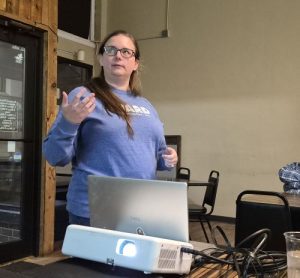
GOTHENBURG, Neb. — Feed testing can help cattle producers make better decisions on forage quality, mineral supplementation and potential feed safety issues, according to Ward Laboratories Feed Testing Product Manager Becca Kern-Lunbery, who spoke Thursday night at a meeting of the Dawson County Cattlemen in Gothenburg.
Kern-Lunbery told producers that forage and feed testing remains one of the most valuable tools available for evaluating livestock nutrition, particularly following weather-related challenges that have affected forage quality in recent years. She explained that Ward Laboratories’ feed testing department was developed in response to requests from Nebraska cattle producers, who originally asked the laboratory to evaluate hay protein levels in addition to soil testing services.
Ward Laboratories analyzes a wide range of samples, including hay, silage, grazing forages, water, manure and fertilizer. Kern-Lunbery said forage samples represent about two-thirds of the work completed by the company’s feed testing department.
A major topic during the presentation focused on interpreting forage reports. Kern-Lunbery encouraged producers to look beyond crude protein levels and also pay attention to factors such as heat-damaged protein, fiber content and digestibility. Excessive moisture in hay, often caused by harvesting during wet weather conditions, can lead to protein becoming unavailable to cattle and may even create a fire hazard if stored improperly.
She also emphasized the importance of evaluating Total Digestible Nutrients (TDN), noting that cattle can experience weight loss when forage energy levels are inadequate, even if protein levels appear acceptable. High fiber levels reduce feed intake and slow digestion, reducing the amount of energy animals receive from forage.
Another area receiving increased attention at Ward Laboratories is mineral nutrition. Kern-Lunbery introduced a mineral sufficiency report available through the laboratory that identifies mineral deficiencies and potential toxicities based on the specific animal and stage of production. She noted that copper deficiency is one of the most common mineral issues identified in forage samples, while excessive iron can further complicate copper availability and supplementation strategies.
The discussion also covered nitrate testing, an important concern following drought conditions and other environmental stresses. Kern-Lunbery said producers should strongly consider nitrate testing in crops such as sorghum, oats and wheat, especially when forage protein levels exceed 12%. According to Ward Laboratories data, approximately one-third of those higher-protein samples may present a nitrate concern.
She encouraged producers not to hesitate to request nitrate testing, even after submitting a sample. Proper management, including dilution with low-nitrate feeds and providing adequate energy supplementation, can often reduce risk when elevated nitrate levels are discovered.
Kern-Lunbery also discussed prussic acid concerns in sorghum-family forages, including sorghum-sudan hybrids and volunteer sorghum. She said drought stress creates conditions that increase both nitrate and prussic acid risks, but the presence of one does not necessarily predict the other. As a result, producers should evaluate both hazards independently when feeding susceptible forage crops.
Ward Laboratories now offers field test kits for prussic acid screening, while laboratory testing remains available for producers who prefer a quantitative analysis.
Throughout the meeting, Kern-Lunbery stressed that proper sampling remains critical to obtaining meaningful test results. She encouraged cattle producers to contact Ward Laboratories for assistance interpreting reports and developing feeding strategies based on forage quality, mineral content and potential feed safety concerns.
“The goal is helping producers make informed decisions with the feeds they have available,” Kern-Lunbery said. “Testing gives us the information we need to manage risk and maximize animal performance.”