


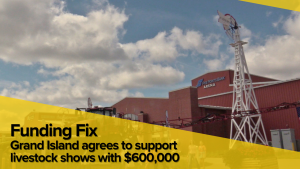
GRAND ISLAND, Neb. — Grand Island’s place on the national livestock map appears more secure — at least for now.
On Tuesday night, the Grand Island City Council unanimously voted to commit $600,000 over the next two years to help keep major state and national livestock shows at Fonner Park. The money will come from the city’s LB840 economic development program and will be issued as forgivable loans, tied directly to shows that are booked and successfully hosted in Grand Island.
The decision follows months of debate over how a community built around agriculture pays to maintain facilities that serve a national livestock industry — even as those events bring millions of dollars in outside spending to the local economy.
New nonprofit takes over show operations
The funding will go to Grand Island Expo Events and Livestock, a newly created nonprofit that will take over booking and management of livestock shows. The organization was formed as the Grand Island Livestock Complex Authority is dissolved.
For tourism leaders, the vote brings something they’ve been asking for: certainty.
“This has been discussion for a long time, but for the city council to unanimously support livestock shows at Fonner Park that at least gives us some certainty to move forward,” said Brad Mellema, Grand Island Tourism Director.
Mellema said the funding is not intended to be permanent, but it does provide breathing room.
“We understand that it’s not a long‑term, forever fix, but it gives us some time to build the funding models that we need from multiple sources, to create a more permanent solution in the future,” he said.
Livestock shows as an economic engine
City leaders repeatedly emphasized that livestock shows are a cornerstone of Grand Island’s agricultural identity — and a major driver of tourism dollars.
“I think that the continuation of this economic growth engine in Grand Island, and it’s at the root of what we are, is a community livestock show,” said Councilman Chuck Haase. “That’s why the State Fair is here.”
Haase noted that Grand Island is competing for national events against cities with large, publicly supported facilities. That includes places like Denver and Kansas City.
Costs rising, margins shrinking
Fonner Park CEO Chris Kotulak has warned that hosting large livestock shows has increasingly become a financial burden for the organization, even as the broader community benefits.
“It’s the citizens of Grand Island who will benefit most of all,” Kotulak said. “The people who have a livelihood that indirectly centers around the shows — such as hotels, restaurants, gas stations, convenience stores — anyone who gets a paycheck benefits from these shows coming to town.”
Kotulak has said rising labor, security, equipment, bedding and facility costs have made the current model unsustainable for Fonner Park alone. In previous discussions, he has also noted that support once provided by Nebraska State Fair staff and resources is no longer financially feasible, shifting more of the burden onto Fonner Park itself.
Compounding the challenge: many of Grand Island’s largest shows are booked three to four years in advance, meaning uncertainty today can ripple years into the future.
“If we choose to let these shows go even for a couple of years, they’re not coming back,” Kotulak has previously warned during an interview with the Rural Radio Network.
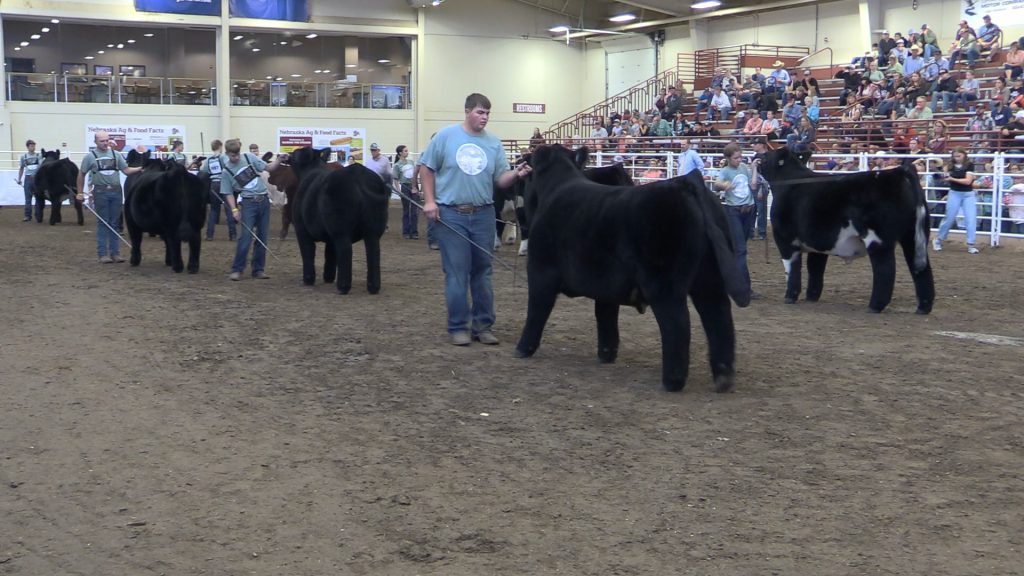
Grand Island has hosted junior nationals for most major cattle breeds including Angus and Hereford.
The same facilities are used by the Nebraska State Fair for livestock shows during the 11-day event while the fair also produces the Aksarben Stock Show. Those are managed and funded by the fair.
Why LB840 funds were used
From the city’s perspective, LB840 funds offered one of the few legally available tools to act quickly.
“Tourism‑related activities is certainly one of those eligible opportunities,” said Mary Berlie, Grand Island’s economic development director. “And it’s the first time that Grand Island’s been able to utilize that component to really better our community.”
Berlie emphasized that LB840 spending includes multiple layers of oversight, with funds only disbursed after contractual and accountability requirements are met.
A short‑term bridge, not a final answer
City leaders stressed the $600,000 commitment is intended as a short‑term bridge, not a permanent solution. Longer‑term funding discussions could involve Hall County, the Nebraska State Fair, or potentially the state legislature — particularly as competing livestock facilities in other states benefit from public operating subsidies.
Councilman Mark Stelk suggested the city use its lobbyist and work with state lawmakers to introduce legislation that could bring state dollars to the community.
For Kotulak, the council’s unanimous vote sends an important message to exhibitors across the country.
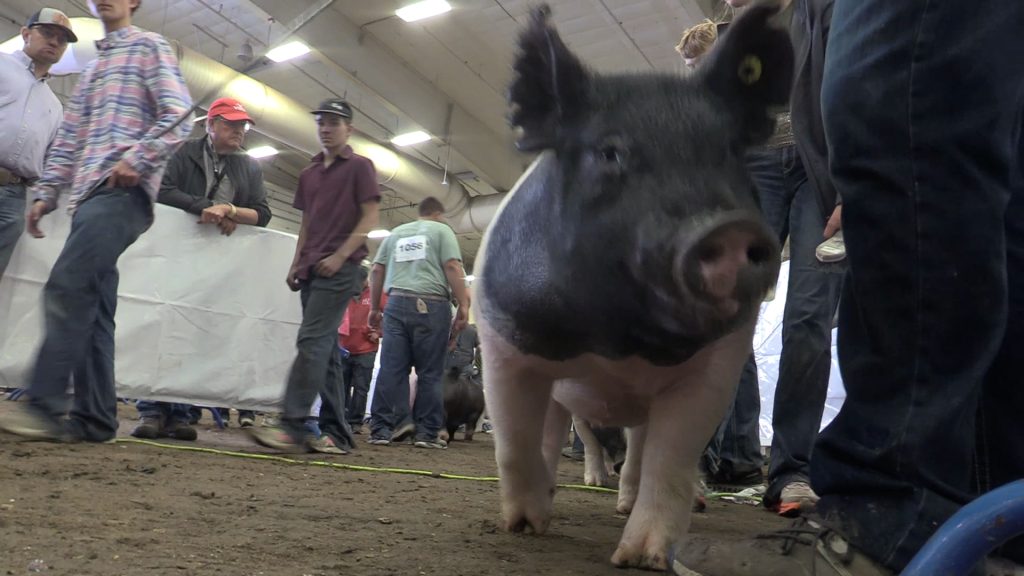
“Certainty is good — not only for the people right here in the city, but for the people who want to come here to show their Herefords, their Angus, their boar goats — knowing Grand Island is committed,” he said.
For now, the trailers will keep rolling into Fonner Park, while broader questions about how Nebraska funds agricultural infrastructure remain unresolved.