



Amid ongoing trade and geopolitical tensions, U.S. farmers and ranchers say strong relationships with neighboring countries remain essential to the future of American agriculture.
That message is front and center this week as the U.S. Meat Export Federation (USMEF) hosts its Red Meat Symposium in Mexico City. The event brings together U.S. exporters, international buyers and American producers to strengthen trade relationships in one of the United States’ most important export markets for beef and pork.
Mexico consistently ranks among the top destinations for U.S. red meat, and producers attending the symposium say face‑to‑face engagement helps protect and grow that market.
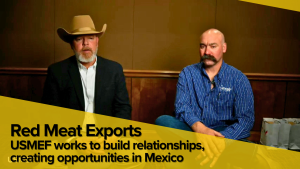
“Relationships are important,” said Brian Amundson, a North Dakota cattle producer and vice chair of the North Dakota Beef Commission. “Creating a strong personal relationship can turn into a stronger business relationship, and that’s how we ultimately bring more dollars back to producers.”
The symposium, now in its second year, was designed to offer an alternative to traditional trade shows by matching exporters directly with buyers most interested in expanding their business with U.S. suppliers. Feedback from the inaugural symposium last year was overwhelmingly positive, prompting an expanded agenda in 2025.
Alongside meetings between buyers and sellers, a delegation of U.S. producers is touring retail outlets across Mexico City to see how American beef and pork are merchandised and promoted across a wide range of consumer markets.
Adam Grabenstein, who farms in south‑central Nebraska and serves on the Nebraska Corn Board, said those tours offer valuable insight into how U.S. meat reaches Mexican consumers.
“We toured traditional wet markets and higher‑end supermarkets,” Grabenstein said. “You see USDA Prime and Choice beef, QR codes explaining cuts and preparation — that’s the kind of consumer education USMEF brings to the table.”
Producers say Mexico’s diverse retail landscape — from open‑air markets to high‑end grocers — creates opportunities for a wide variety of meat cuts. Many of those cuts are less commonly used in the United States but are in high demand in Mexico, helping increase the overall value of each animal.
Those exports also support demand throughout the livestock sector, benefiting crop producers as well.
“A good way to add value to a bushel of corn right now is through livestock,” Grabenstein said. “And beef is at the forefront of that.”
Amundson said the hands‑on experience of visiting markets and meeting buyers reinforces the importance of international trade, even for producers who rarely see the end consumer.
“You have to come here, see it, shake the hands, and bring that experience back,” he said. “International markets are critical to the future of U.S. agriculture.”
The U.S. Red Meat Symposium runs April 14–17 and is supported by USDA. USMEF Chair Jay Theiler, of Boise, Idaho-based Agri Beef, is leading a delegation of 18 producers and other industry leaders from the National Pork Board, the Colorado Pork Producers Council, the Illinois Pork Producers Association, the Iowa Corn Growers Association, the Missouri Corn Merchandising Council, the Montana Beef Council, the Nebraska Beef Council, the Nebraska Corn Board, the Nebraska Pork Producers Association, the North Dakota Beef Commission, the Oregon Beef Council and the Pennsylvania Pork Producers Council.