


Funding for this series is made possible by the Specialty Crop Block Grant Program, a USDA-funded initiative supporting specialty crop producers.
What started as a roadside produce stand in eastern Nebraska has grown into a destination farm for thousands each year, as Nelson Produce + Farm leans into agritourism and specialty crops to connect consumers with how food is grown.
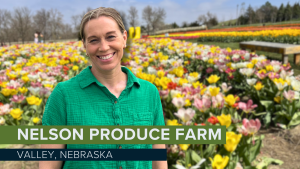
This spring, that effort is on full display near Omaha, where about 800,000 blooming tulips are drawing visitors for the farm’s second annual Tulip Festival
“We’ve got about 400,000 tulips out here,” said Pam Nelson of one of their fields. “About 36 varieties of tulips in this particular field.” In total, they grow over 60 tulip varieties on eight acres.
The Tulip Festival, one of many events they host throughout the year, is part of a broader expansion that began in 2019, when the Nelson family opened their farm to the public. The decision came after realizing many people, even in Nebraska, had never set foot on a working farm.
“Nobody in our small Bible study group had been to a real working farm before, which really shocked us living in Nebraska,” Nelson said.
Since then, the operation has added U-pick gardens, field trips, and other seasonal attractions like Strawberry Fest and Farm Camp aimed at giving visitors a hands-on look at agriculture. The approach reflects a growing trend among Nebraska specialty crop producers, who are finding new revenue through direct sales and on-farm experiences.
Nelson said that shift has required farmers to be more intentional about telling their story.
“People really started questioning ‘What is happening in the farm world and where is our food coming from?’ We as farmers really had to kind of step up and tell our stories better than we were before,” she said.
At the same time, the farm continues to operate at scale, including raising more than a million watermelons each year. Nelson said the challenge is balancing the realities of production agriculture with what consumers expect to see.
The goal, she said, is to close the gap.
“Educating people on where food comes from … and giving them a chance to connect with farming out here,” Nelson said.
OTHER TOPICS COVERED:
- Labor challenges outside peak summer months
- Growth from a family stand to a multi-season operation
- Watermelon production and sourcing strategy
- Educational programming for students and families
This story is part of an ongoing series highlighting specialty crop production across Nebraska.
Other episodes:
Pekarek’s Produce: Using cold storage to build year-round vegetable sales in Nebraska