


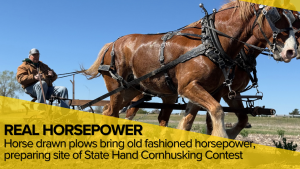
It’s easy to forget how much horsepower it used to take to farm the land.
On a crisp spring morning at Stuhr Museum in Grand Island, the sound of engines was replaced by older sounds — chains clattering, harnesses creaking, and a steel plow slicing into earth.
Teams of draft horses were at work, preparing the ground for the Nebraska State Hand Cornhusking Contest.
Three teams of horses, guided by three experienced horsemen, took turns turning roughly six acres of corn ground. The equipment was old, some of it pushing a century in age, but it worked much the same as it always has.
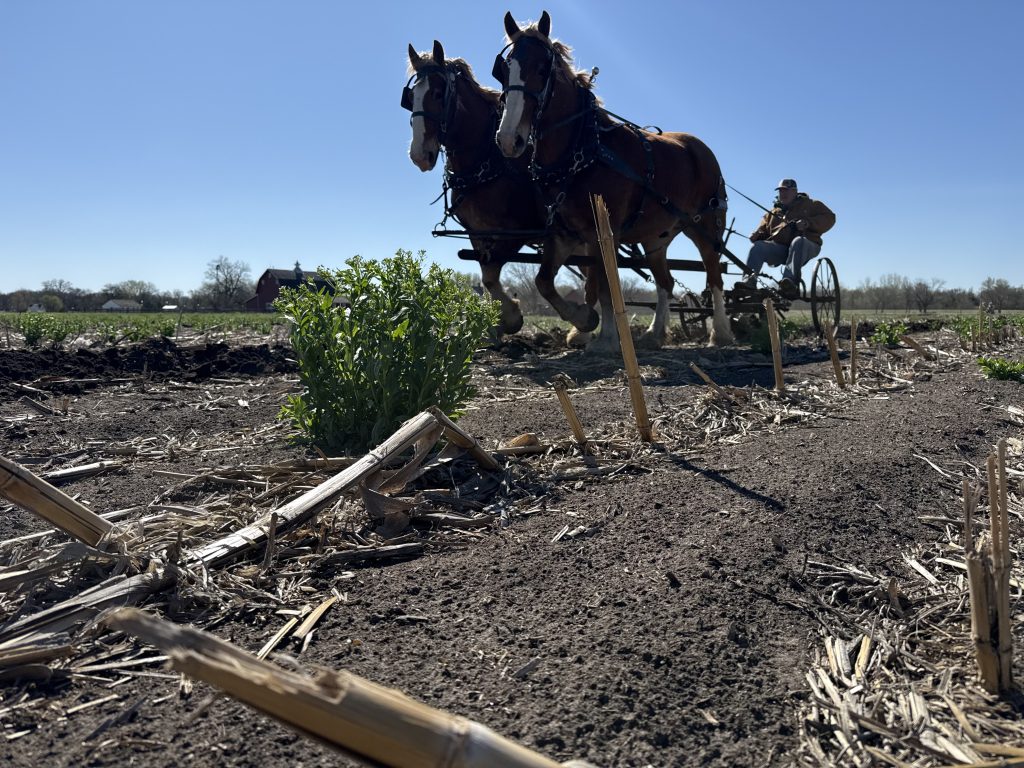
There’s no autosteer out here. “You gotta have a good eyeball,” one said.
Old Equipment, Working Knowledge
Keith Rudeen of Elm Creek brought a team he hadn’t hitched to a plow in years. Semi-retired, with a few cows at home, Rudeen said working horses has become his version of a hobby, although that may undersell the effort.
“Some people fish. Some people golf,” he said. “These are my toys.”
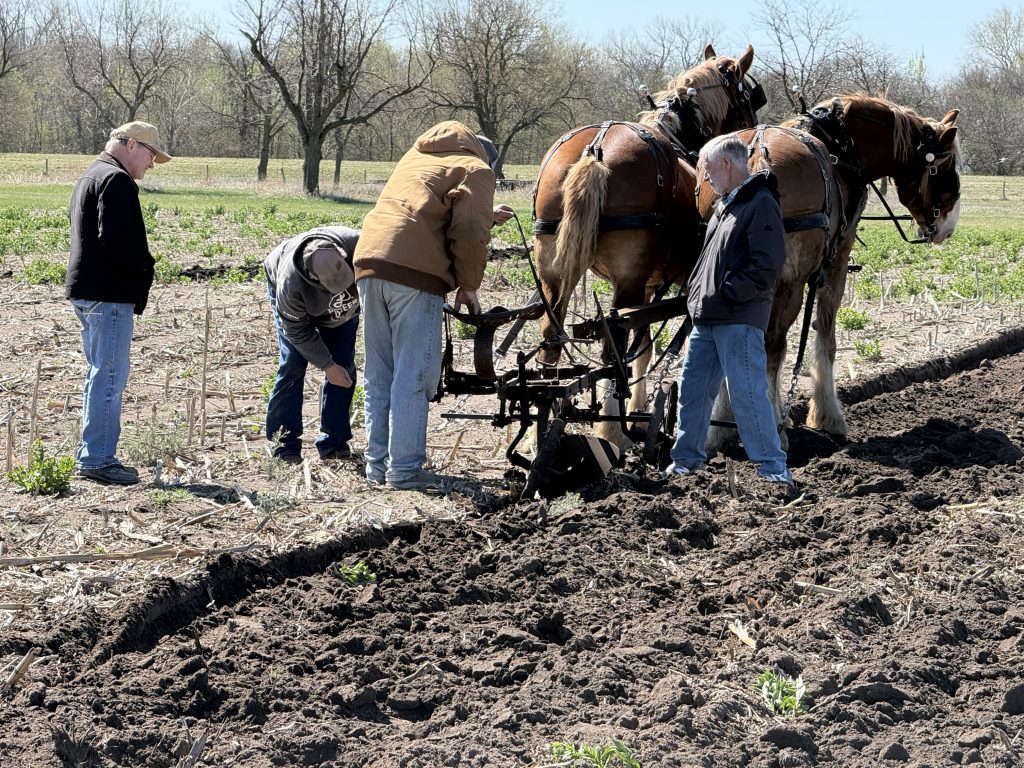
The plowing wasn’t perfect. At one point, Rudeen was bucked off his plow. No need to run to the parts store, as they dug through a toolbox to find the hardware to keep going.
Don Carter of Elm Creek said that’s part of the appeal.
“A forge and a hammer, you can fix it.”
Twin Brothers, Paired Teams
Don Carter has been involved with the state hand cornhusking contest since 1990, hauling corn and helping where needed. On this day, he worked alongside his identical twin brother, Dan Carter of Loomis, who brought his own team of Percherons and an antique plow rebuilt by a friend.
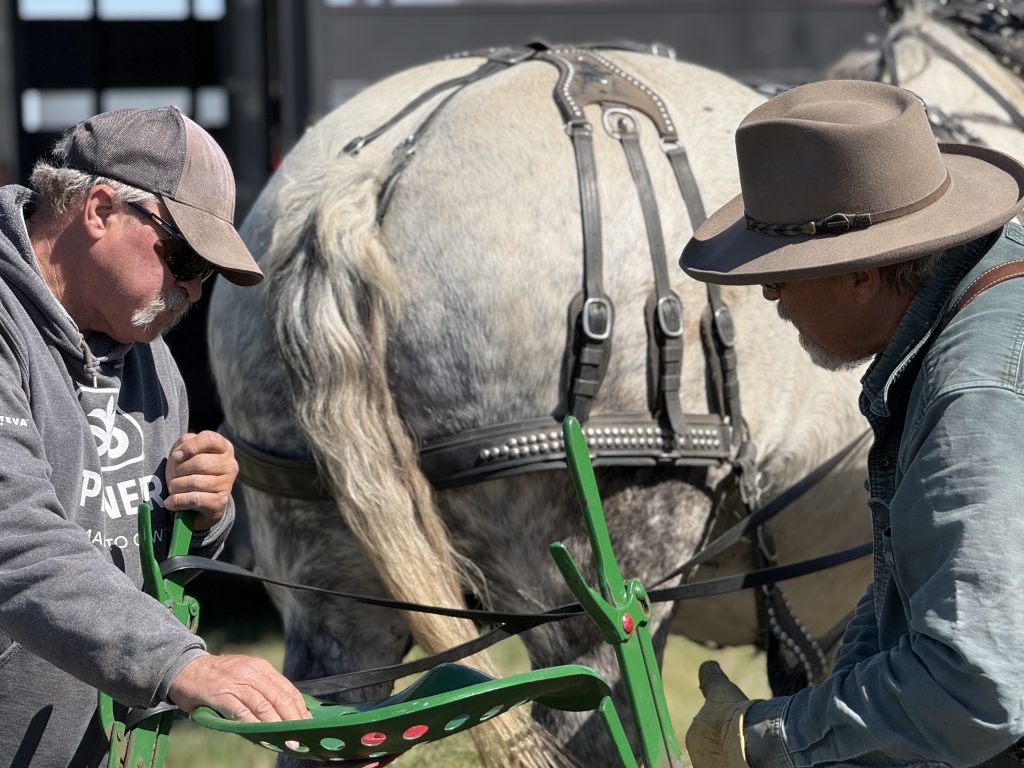
Together, the brothers guided their teams across the field — matched pairs of horses out front, matched brothers holding the lines behind them.
More Than a Demonstration
The Nebraska State Hand Cornhusking Contest has moved around the state, finding a home over the years in Central City, Gothenburg, Holdrege, and York. Most recently Stuhr Museum has hosted the event, giving it a visible home, right off the highway, in a place where history is part of the landscape.
For the horsemen, the value isn’t just historical.
Families and museum visitors stopped to watch throughout the day. Kids stared at the size of the horses. Adults lingered, asking questions, taking pictures. The horses themselves remained calm and focused, responding to soft verbal commands rather than noise.
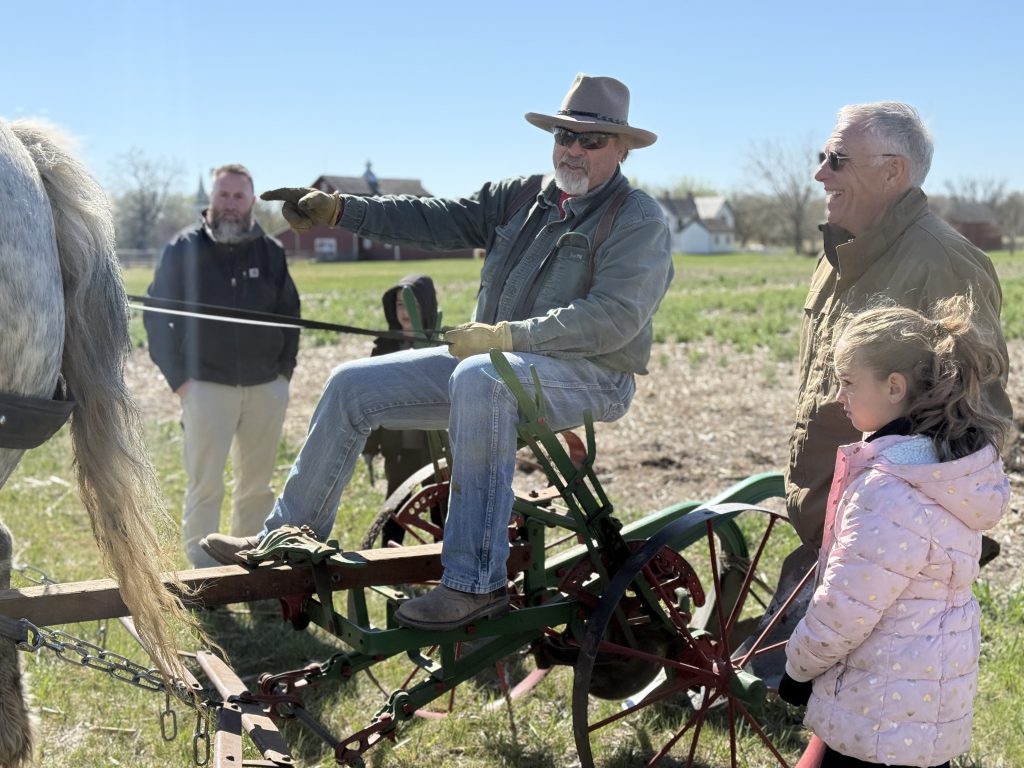
“They like people,” Carter said. “They like a crowd.”
Looking Ahead to Fall
By fall, corn will be picked by hand, tossed into wagons pulled by the same horses that helped prepare the soil.
Modern equipment could do the job faster, but speed isn’t the point as they keep Nebraska’s ag heritage alive.
“It’s quiet,” Don Carter said. “It’s peaceful out here. That’s what’s nice about it.”
Listen to the full radio feature to hear the sounds and stories from the field.