



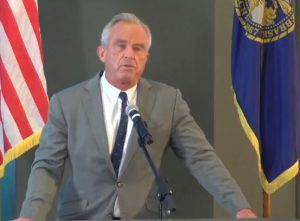
U.S. Secretary of Health and Human Services Robert F. Kennedy Jr. visited the University of Nebraska Medical Center in Omaha Thursday, praising Nebraska’s leadership on the Trump administration’s “Make America Healthy Again” agenda and highlighting the state’s efforts to improve nutrition, rural health care and public health preparedness. Speaking alongside Governor Jim Pillen and University of Nebraska President Jeffrey Gold, Kennedy called Nebraska a national leader in implementing health policies designed to reduce chronic disease and improve long-term health outcomes.
Kennedy singled out Pillen for championing changes to the Supplemental Nutrition Assistance Program, including Nebraska’s effort to remove soda and energy drinks from SNAP purchases. He also applauded the governor’s support for restrictions on petroleum-based food dyes and Medicaid work requirements. Kennedy argued that taxpayer-funded nutrition programs should focus on healthy foods and said reducing chronic disease must be a national priority.
The secretary also praised UNMC and Nebraska Medicine’s National Quarantine Unit, calling it a world-renowned center for biocontainment and health security. He noted the facility recently housed and monitored Americans exposed to hantavirus aboard the cruise ship MV Hondius, with no cases ultimately detected. Kennedy said UNMC’s expertise is being used to train health personnel working in Africa and to support the development of international biocontainment capabilities, underscoring the facility’s importance to national and global health security.
Kennedy also highlighted a nationwide initiative to strengthen nutrition education in medical schools, crediting President Gold and the University of Nebraska for helping launch the effort. He said nearly 80 institutions across 36 states have committed to expanding nutrition training for future physicians. Kennedy additionally pointed to Nebraska’s $218 million award from the federal Rural Health Transformation Fund, saying the investment will help strengthen the rural health workforce, expand access to care, improve behavioral health services and support programs aimed at preventing chronic disease.