



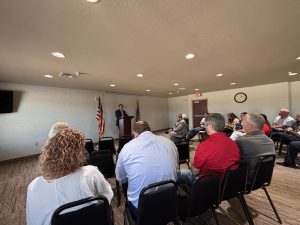
BROKEN BOW, Neb. — U.S. Rep. Adrian Smith visited Broken Bow on Thursday as part of his August travels through Nebraska’s 3rd Congressional District, discussing federal tax policy, agricultural concerns and efforts to expand access to year-round E15 fuel.
Smith said traveling the district while Congress is not in session allows him to hear directly from the people affected by decisions made in Washington.
“When we’re not in session, I’m generally somewhere around the 80 counties of the 3rd District,” Smith said. “There’s nothing like being on site, talking to folks face to face.”
During the visit, Smith highlighted provisions in the Working Families Tax Cuts that he said are benefiting employees, parents, farmers and small-business owners.
“We found out that 30 million tax filers across the country benefited from the tax relief on overtime,” Smith said. “That’s a good sign that the right folks are benefiting from these policies. It’s a result of hard work, and we want to reward hard work, not penalize it.”
Smith also pointed to the permanent expansion of the child tax credit as an important benefit for working families. He said the credit was previously scheduled to expire before Congress acted to preserve it.
“The fact that we were able to make that permanent is helping a lot of families,” Smith said.
Another provision allows businesses and agricultural operations to immediately expense certain investments, including farm machinery and manufacturing equipment. Smith said the policy can encourage owners and producers who may be uncertain about making a major purchase.
“This tax policy encouraged them where they could immediately expense this,” Smith said. “That helped their operation become more productive, with more output. That ultimately helps consumers and ultimately helps the economy.”
Smith recently visited Scottsbluff to view an airport taxiway project. He said investments in rural infrastructure can provide economic benefits that extend beyond the project itself.
Because Scottsbluff serves as a relief airport for Denver, Smith said improvements can allow the airport to accommodate more diverted aircraft. Those planes can then purchase fuel and bring additional economic activity into the community.
“When you look at infrastructure, that’s one of the more fundamental functions of government,” Smith said. “We can’t afford to neglect things, but we also need to see these as opportunities.”
Agriculture remains one of the leading concerns Smith has heard during his district travels. He said low corn prices, drought conditions in the Nebraska Panhandle and the lasting effects of wildfires are creating challenges for producers.
“There is a lot of concern out there,” Smith said. “We want to make sure that the bureaucracy doesn’t stand in the way of relief, whether it’s droughts in the west or fires in central Nebraska.”
Conditions also vary considerably across the district, with some eastern areas receiving excessive moisture while western Nebraska continues to face drought.
“That’s a reflection of our country, of different needs in different parts of the country,” Smith said. “Boilerplate approaches are often the wrong way to go.”
Smith also discussed legislation that would allow year-round sales of gasoline containing 15% ethanol. The measure recently passed the House and now awaits action in the Senate.
“The Senate needs to pass it, and if there are differences, we’ll need to work out those differences, vote on it again and get that over to the White House,” Smith said.
Smith said Nebraska Sens. Deb Fischer and Pete Ricketts are supporting the effort. He believes the bipartisan vote in the House gives the proposal momentum as it moves through Congress.
Smith described rural Nebraska as being on the “front lines of the economy” and said conversations during his district travels help shape his work in Washington.
“It’s really about taking their ideas to Washington,” Smith said. “That’s the main part of my job.”