



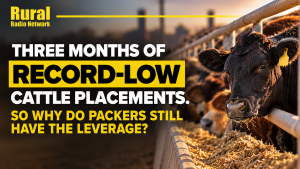
USDA’s latest Cattle on Feed report points to a shrinking pipeline of cattle, though livestock market analyst Kyle Bumsted cautions that producers may have to wait for the market to reflect that tightening supply.
The nation’s cattle supply is getting tighter, but that doesn’t necessarily mean cattle producers will see stronger prices immediately.
That’s the distinction livestock market analyst Kyle Bumsted is making following Friday’s release of the U.S. Department of Agriculture’s October Cattle on Feed report. The numbers came in more bullish than traders anticipated, particularly for cattle entering feedlots. However, historically slow marketings and heavier carcass weights continue to complicate the supply picture.
Quick Read:
- Cattle supplies are tightening. Three straight months of record-low feedlot placements point to fewer market-ready cattle in the months ahead.
- Packers still have the upper hand. Cattle are moving out of feedlots slowly, and heavier carcass weights are helping keep beef supplies up despite fewer animals.
- The question is when, not if. Analyst Kyle Bumsted says the report is bullish for cattle prices further down the road, but producers may have to wait for the tighter supply to shift market leverage.
USDA reported 11.4 million cattle on feed as of Oct. 1, slightly below year-ago levels. September placements fell 12% from a year earlier, considerably more than the 7% to 8% decline traders had expected. Marketings were down 7%, largely in line with expectations.
Both placements and marketings reached their lowest September levels since USDA began tracking the series in 1996. It also marked the third consecutive month of record-low figures for both categories.
Bumsted said those records tell only part of the story.
“So to lay it out plain here, we’re carrying the smallest cattle herd in 75 years, record low cattle coming through the front door, three months running, and only now are the feed yards holding fewer cattle than a year ago. Barely. Barely 46,000 head.”
The disconnect comes down to how quickly cattle are moving through feedlots.
Despite sharply reduced placements, cattle have been leaving feedlots at a historically slow pace. Bumsted noted that marketings have been the slowest on record for each month since June, while carcass weights are running approximately 50 pounds above the 10-year average.
That additional weight helps maintain beef production even as the number of available animals declines.
In Nebraska, cattle on feed totaled 2.55 million head on Oct. 1, unchanged from a year earlier and up 3% from September.
September placements in Nebraska fell 16% to 490,000 head, compared with 585,000 a year earlier. Marketings dropped 10% to 400,000 head.
The quarterly report also showed heifers accounting for 38% of cattle on feed nationally, unchanged from last year. Bumsted said the figures offer little evidence that producers have begun retaining significant numbers of replacement heifers to rebuild the nation’s breeding herd.
For cattle producers, the more consequential question may be when reduced placements begin translating into stronger bargaining power.
“The wall of heavy cattle out front hasn’t moved. The marketings were flat with August, so the packer keeps their leverage near term. But the supply behind that wall just got thinner.”
That leaves the market facing two different supply situations. In the immediate term, cattle already in feedlots and slow marketing rates continue to give packers leverage. Further out, sharply reduced placements suggest fewer market-ready cattle will be available.
Bumsted said the report could support a rally when cattle futures reopen Monday, with some market participants anticipating gains of $1.50 to $2 in live cattle futures.
But he cautioned against assuming the tightening supply will immediately translate into stronger cash prices.
“This report is bullish, the back end of the board. The cattle do get scarce. The only argument is still ‘when.’”
Another factor worth watching is the movement of Mexican cattle through reopened border crossings.
Bumsted pointed to increased placements in Arizona and other states that include New Mexico as early indications of renewed cattle movement. Arizona placements totaled 19,000 head in September, compared with 13,000 a year earlier, while placements in the broader group of other states increased 49% from August.
Those numbers remain relatively small, but Bumsted said next month’s report could provide a clearer picture of the impact.