



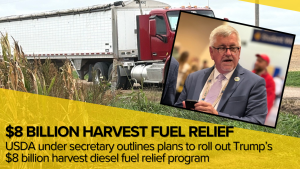
USDA Undersecretary Richard Fordyce says row-crop producers will be addressed first under the new relief program, while expanded reference prices have increased potential payments through existing farm programs.
The U.S. Department of Agriculture is developing an $8 billion harvest relief program announced by President Donald Trump, with traditional row-crop producers expected to be the first to receive assistance.
USDA Undersecretary Richard Fordyce told the Rural Radio Network during an interview at the National FFA Convention that the department plans to roll out the program in phases. The Farm Service Agency will be involved in administering the assistance.
“We’re still putting the program together,” Fordyce said. “We’re going to do it in a couple of phases. We’re going to address Title I crops first.”
Fordyce said USDA has more readily available data for conventional row-crop operations, allowing officials to develop that portion of the program first. He said the department also intends to address specialty crops and other sectors of agriculture.
The relief program is intended to provide assistance amid pressure from rising farm input costs. Fordyce said USDA has identified $8 billion for the effort, which the department is still developing.
Questions have also been raised about the Commodity Credit Corporation, a source of funding for USDA farm programs. Fordyce said the department maintains a financial cushion to account for potential needs, including natural disasters and other unexpected expenses.
“We’re pretty comfortable with that cushion that we have left in the Commodity Credit Corporation,” Fordyce said.
ARC and PLC payments rise sharply
The new relief effort comes as changes to the Agriculture Risk Coverage and Price Loss Coverage programs are increasing the amount of assistance available to farmers.
Fordyce said national ARC and PLC payments totaled about $1.9 billion at the same point in the previous payment cycle. This year, the total before payment limitations and other factors are applied is $13.8 billion, he said.
He attributed the increase primarily to two changes included in the Working Families Tax Cuts Act: higher payment limits and increased reference prices.
Reference prices help determine when producers qualify for PLC payments. Higher reference prices can make payments available at market prices that might not have triggered assistance under previous thresholds.
Fordyce said the updated reference prices better reflect current conditions on farms across the country. He said agricultural commodity groups had made increasing those prices a priority in discussions leading up to the legislation.
The $13.8 billion figure is a total before payment limitations and other factors are taken into account, Fordyce emphasized. It should not be interpreted as the final amount producers will receive.