




The Lexington City Council conducted several public hearings Tuesday on several measures recommended by the Planning Commission aimed at preparing former Tyson Foods property for future industrial redevelopment.
The Council approved the creation of the South Industrial First Addition subdivision and annexation of approximately 419 acres of land recently acquired by the City of Lexington from Tyson Foods. City officials said the property east and south of the former Tyson facility will be divided into three tracts to simplify legal descriptions and prepare the land for future industrial marketing and development. The same tracts were annexed into the City jurisdiction.
The Council also approved an amendment to Redevelopment Area No. 1, adding the Tyson production building and several parcels near the former Tyson facility and reaffirming the area’s designation as blighted and substandard.
In a memorandum to City Manager Joe Pepplitsch, Omaha-based planning and development firm Hanna:Keelan Associates evaluated approximately 400 acres that includes the vacant Tyson facility and surrounding undeveloped land. The review found several indicators of blight and substandard conditions under Nebraska law, including aging structures, vacant property, underutilized land, and obsolete platting. The two primary buildings in the area were built in 1974 and 1981, with an average age of nearly 49 years, exceeding the state’s 40-year benchmark.
In addition, the Council approved an ordinance on first reading that updates Lexington’s official zoning map and extraterritorial zoning jurisdiction boundaries.
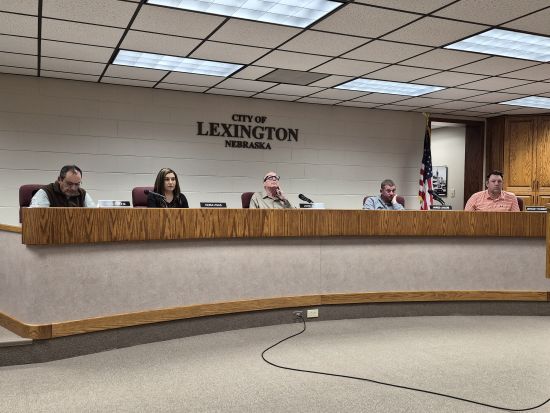
Lexington City Council Approves Pay Increase
The approved an ordinance increasing annual salaries for council members and the council president for the first time in about a decade.
During Tuesday’s meeting, council members discussed whether to delay action and leave the decision to a future council. A motion by Council Member John Salem to table the proposal until new members of the City Council are seated failed for lack of a second. City Manager Joe Pepplitsch advised that postponing the measure could push any changes back several years because state law prevents elected officials from increasing their own pay during their current terms.
Pepplitsch told the council the last salary adjustment plan was put in place roughly 10 years ago and was designed to gradually increase compensation over time. He said the proposed increase was intended to keep Lexington’s pay levels competitive with similar Nebraska communities and was not meant to provide substantial personal income. Pepplitsch added that some council members use their compensation to support community projects and charitable causes.
Discussion also suggested that Lexington’s current pay ranks toward the lower end compared with other communities, and the proposal would move compensation closer to the middle range among comparable Nebraska cities.
The council ultimately waived the three readings and approved the ordinance on a 4-1 vote, with Mayor John Fagot and Council Members Jared Jacob, Jeremy Roberts and Dora Vivas voiting in favor and Salem against.
The measure sets the City Council members’ annual salary at $7,000 and salary for Council President, also known as Mayor, at $8,000. Starting January 1, 2029 and for every two years thereafter, the annual salary would increase by $500. Without the vote, City Council Member’s salaries would have been $3,500 and Council President at $4,500.
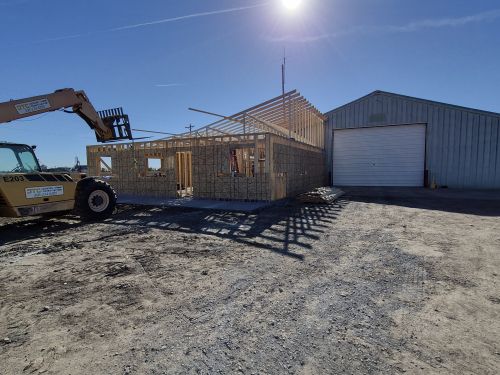
The Council approved the first pay request from Duncan Theis Construction for work on the Nebraska Public Power District office addition to the City owned building on east Walnut Street. The amount was $37, 166.40. Pepplitsch recommended approval citing work involving excavation, foundation, rough plumbing, along with frame work and truss work. The office portion had been inside the building among trucks parked in there for utility work.